
The first cold weekend of the year sends thousands of people online to buy firewood, pellets or heating oil. Police have a warning for exactly that moment: the cheapest shop on the list is often not a shop at all.
What is actually going on
At the end of September, police in northern Germany warned about a wave of fake firewood shops selling logs, pellets and other heating fuels at prices far below the market. Several cases had been reported within a few days, and each victim lost somewhere between a few hundred and a few thousand euros.
The pattern repeats. You find a tidy website with product photos, a delivery promise and a telephone number. You order. At the last step of the checkout, the only payment method left is a bank transfer in advance. The money goes out and the delivery never comes. In some cases the site is a copy of a real dealer’s website, using the same photos and the same products.
Austrian police issued the same warning at the start of the heating season, and the Austrian consumer watchdog Watchlist Internet keeps a public list of shops like these. Its message is blunt: whoever orders in such a shop and pays in advance has lost the money, because nothing is ever delivered.
Why it matters to you
When you pay by bank transfer, the money leaves your account the same day. Your bank can ask the receiving bank to send it back, but that works only in the first days, and only if the money is still sitting in the account. Criminals plan around that window.
After you have paid, a fake seller does not vanish immediately. They answer messages, apologise and blame delivery problems, often in a WhatsApp chat. Every day of waiting makes a recall less likely. Sometimes a cheap, damp pile of wood does arrive. Then you are arguing about quality instead, which is a slower and harder fight.
The timing is not a coincidence. Advisers at the Lower Saxony consumer centre call it part of the business model: e-bikes in spring, heating fuel in autumn. When demand is high and prices are high, a bargain looks believable.
How to check a shop before you pay
- Search the shop’s name together with the word “scam”, “fake” or “experience”. These shops get reported quickly, and one search often settles the question.
- Open the legal notice page. In Germany every commercial shop must publish one, with a company name, a full address and a way to get in touch. Then type that address into a map service. If it leads to an empty plot or a private flat, leave.
- Call the telephone number printed on the site. Fake shops often use numbers that do not exist, or that nobody answers at any hour of the day.
- Compare the price with two other sellers. An offer far below everybody else is the clearest warning sign there is.
- Watch the last step of the checkout. If card payment, PayPal or payment on invoice appear at first and only an advance bank transfer remains at the end, close the page.
- Type the shop’s web address into the Fakeshop-Finder, the free checker run by the German consumer advice centres at fakeshop-finder.de. It answers with a traffic light, green, yellow or red, and explains what it found.
- Never pay with gift cards, top-up cards or a cash transfer service. No real shop asks for that.
Three beliefs that are not true
Myth: a professional website means a real company
A convincing shop can be built in an afternoon from a template, and AI tools now write the product texts and fill the pages in minutes. That is why these sites no longer look obviously fake. Police say some of them are copied from the websites of real, existing dealers.
Myth: a legal notice proves the shop exists
Most fake shops publish one. The details inside are invented, or taken from a real company that has nothing to do with the site, and that company is a victim too. Checking the address on a map, and searching the company name on its own, is what the shop page itself cannot fake.
Myth: paying in advance is normal when you buy firewood
Advance payment is not unusual in this trade, especially with small dealers. The danger is the combination: advance payment, a bargain price, and a shop you cannot check. If two of those three are present, buy from somebody you can call or visit, even at a higher price.
What to watch for next
Fake shops are cheap to set up and short-lived. When one is reported and blocked, three new addresses appear, often with the same design. That is why the consumer advice centres built a checker instead of a list. Since it started, the Fakeshop-Finder has examined more than 2.1 million web addresses and identified more than 81,000 fraudulent shops.
Expect the same trick wherever goods are scarce. Pellets and briquettes now; generators, heat pumps and e-bikes when the season turns. If something is hard to find and the offer looks astonishing, check the seller before you compare prices.
The one thing to remember
If the only way to pay is a bank transfer to a stranger, you are not buying firewood. You are sending money and hoping. Walk away, and buy from somebody you can call or visit.
If you have already paid: call your bank today and ask about getting the transfer recalled, keep the order confirmation, the payment receipt and every chat message, and report it to the police. A complaint to your consumer advice centre costs nothing and helps warn other people.
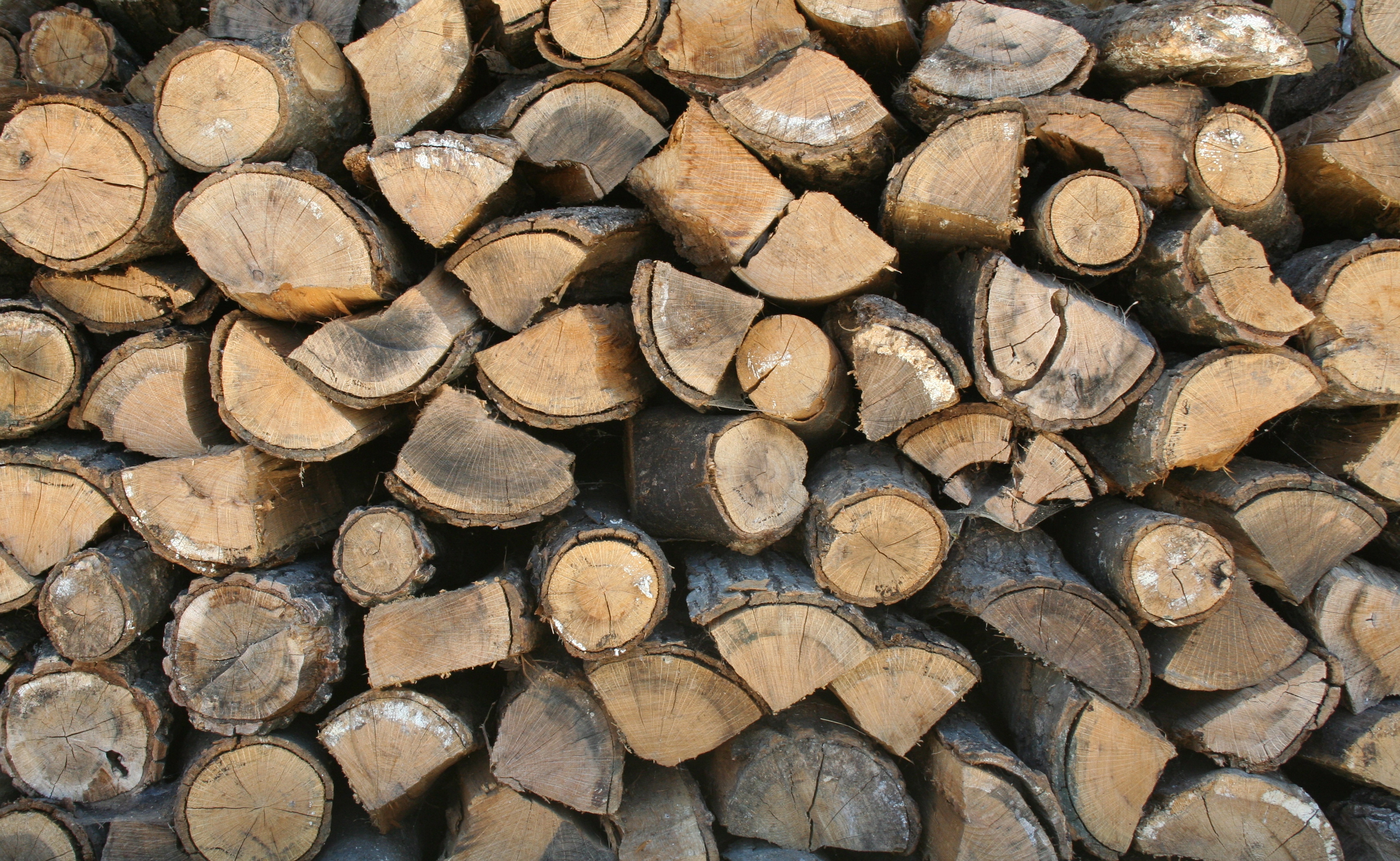
Image credits: “Stack of firewood” by Mobius, via Wikimedia Commons, released into the public domain (PD-self).