IT Consulting & Digital Solutions
Ahmad Kouider — Full-Stack Developer & IT Consultant in Dortmund
Delivering innovative software solutions, digital marketing, SEO optimization, online stores, and expert consulting services to enhance your business efficiency and digital transformation.
 available for projects
// about me
The human behind the terminal
I'm Ahmad Kouider — a full-stack developer and IT consultant based in Dortmund. I build web platforms, automate the infrastructure underneath them, and put AI to work on problems that genuinely need solving.
Since 2017 I have shipped software end to end — the database schema, the API, the interface, and the deployment pipeline behind it. Clients get one person who owns the whole stack instead of three hand-offs.
Most of my day happens in a shell: Laravel and Node services, React and Angular interfaces, Docker and LXC containers, MariaDB, and a fair amount of shell scripting. If something can be automated, I would rather automate it than do it twice.
$ whoami
ahmad — full-stack developer & IT consultant
$ uptime --since
2017 · Dortmund, DE
$ ls ./focus
web-apps  devops  automation  ai  seo
$ status
● available for new projects
// why me
Why Choose Me
Expert IT consulting and digital solutions provider specializing in cutting-edge technology.
$ kouider –reasons=3
Innovation & Quality
I stay at the forefront of technology trends, delivering cutting-edge solutions that give your business a competitive advantage.
Client-Focused
Every project is tailored to meet your specific business needs and goals, ensuring maximum ROI and customer satisfaction.
Comprehensive
Development · Digital Marketing · SEO · E-commerce — end-to-end digital solutions for your business.
// what i do
My Services
Comprehensive digital solutions tailored to your business needs
Full-Stack Development
React, Angular, Laravel, Node.js, PHP, VueJS, NestJS, Spring Boot
Database Solutions
MySQL, PostgreSQL, MongoDB — design, optimization, and management
DevOps & Cloud
Docker, Ansible, Coolify, Linux, CI/CD pipelines, cloud management
AI Solutions
AI Agents, GPT API, CrewAI, MCP tools, LLM integrations, automation
E-commerce Solutions
WooCommerce, Shopify, custom shops, payments, analytics
System Automation
Raspberry Pi, ESP8266, C++, Puppeteer, browser automation, IoT
// in plain terms
What Full-Stack Development Means Here
One person, every layer — from the interface you click to the server that keeps it running.
Full-stack development is the practice of building a web product end to end: the interface people use, the application logic behind it, the database that stores the data, and the server that serves it all. On this site that means a single person is responsible for every layer, so nothing gets lost between separate teams, and fixes happen in one place instead of three.
Concretely, that covers:
- Front end — responsive interfaces in JavaScript, TypeScript, Angular, React and VueJS that stay usable on a phone.
- Back end — PHP and Laravel services, REST APIs and the business logic that connects everything.
- Data — schema design, migrations and tuning in MySQL, PostgreSQL and MongoDB.
- Infrastructure — Linux servers, Docker, Nginx, SSL and CI/CD pipelines that deploy without surprises.
- Automation — Raspberry Pi and ESP8266 devices, C++ firmware and browser automation for repetitive work.
Who is this work for?
It fits teams and founders who need a working product rather than a slide deck: a company site that finally loads fast, an internal tool that replaces a spreadsheet, a shop that takes payments, or infrastructure that someone actually maintains. If you already have an in-house team, I work alongside them on the parts nobody has time for.
What does a typical engagement look like?
Most projects start with a short written brief and a call, then a fixed scope with milestones. You get reviewable increments rather than one big reveal, and you own the code and the servers at the end. Small changes are usually delivered within days; a full site build runs for a few weeks.
// process
How a Project Runs, Step by Step
-
You describe the goal.
Send a few sentences through the contact form — what should exist, who uses it and what success looks like. No specification document needed at this stage.
-
I map the scope and the risks.
You receive a short plan with the technical approach, the phases and a fixed price per phase, so you know the cost before any code is written.
-
We build in reviewable increments.
Each milestone is deployed to a staging URL you can click through. Feedback goes back into the next increment instead of piling up until the end.
-
Testing and launch.
Before go-live the build is checked for responsive behaviour, performance budgets and security headers, then deployed with SSL on your server or mine.
-
Handover and support.
You get the repositories, documentation and access credentials. For 30 days after launch, fixes for anything in the delivered scope are included.
// case studies
Selected Client Work
Real projects, delivered on GNU/Linux with Nginx, SSL and WordPress or Laravel underneath.
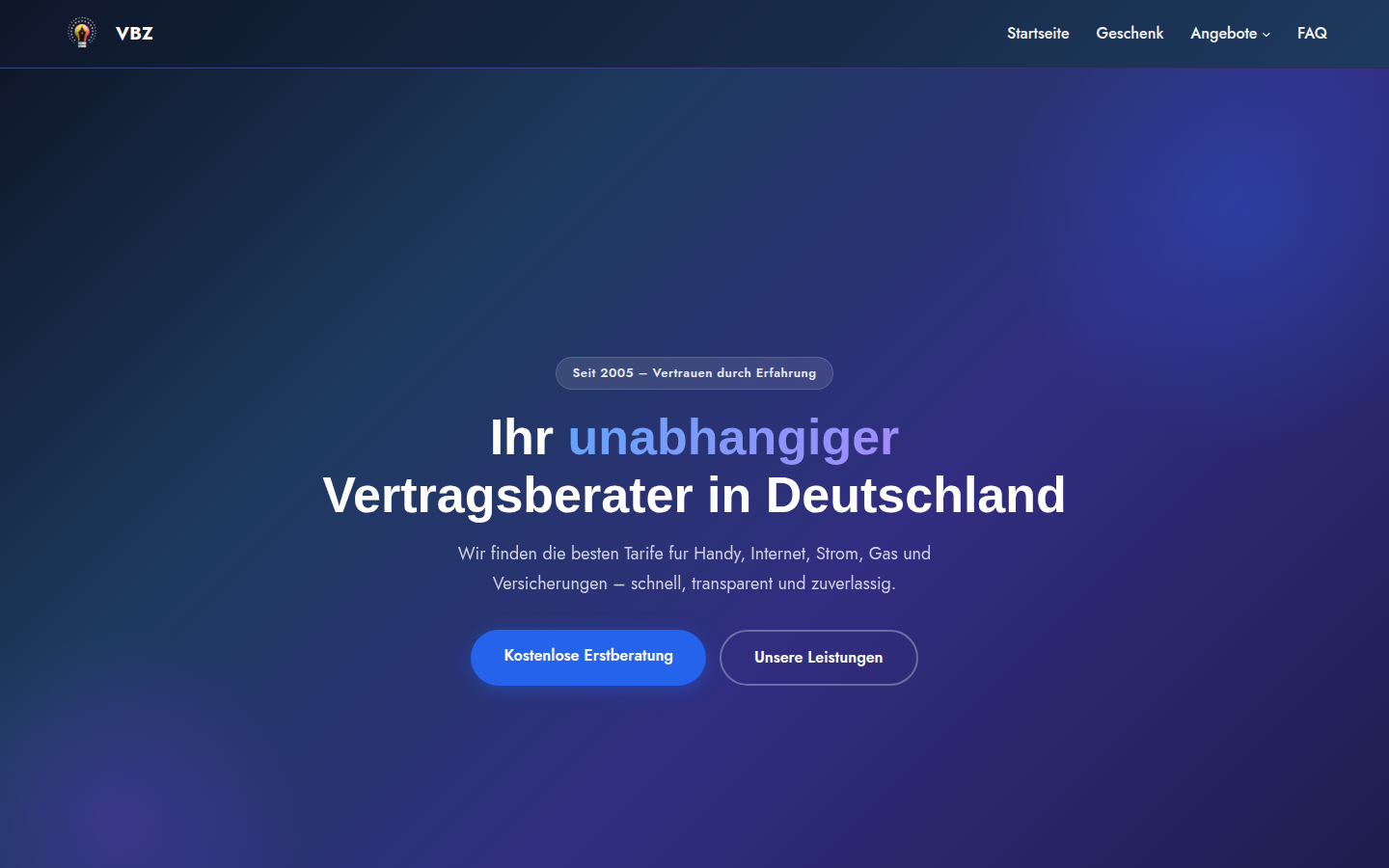
VBZentrum
Full corporate website with a conversion-focused layout, custom WordPress theme and PHP backend work, deployed on Linux with Nginx and SSL.
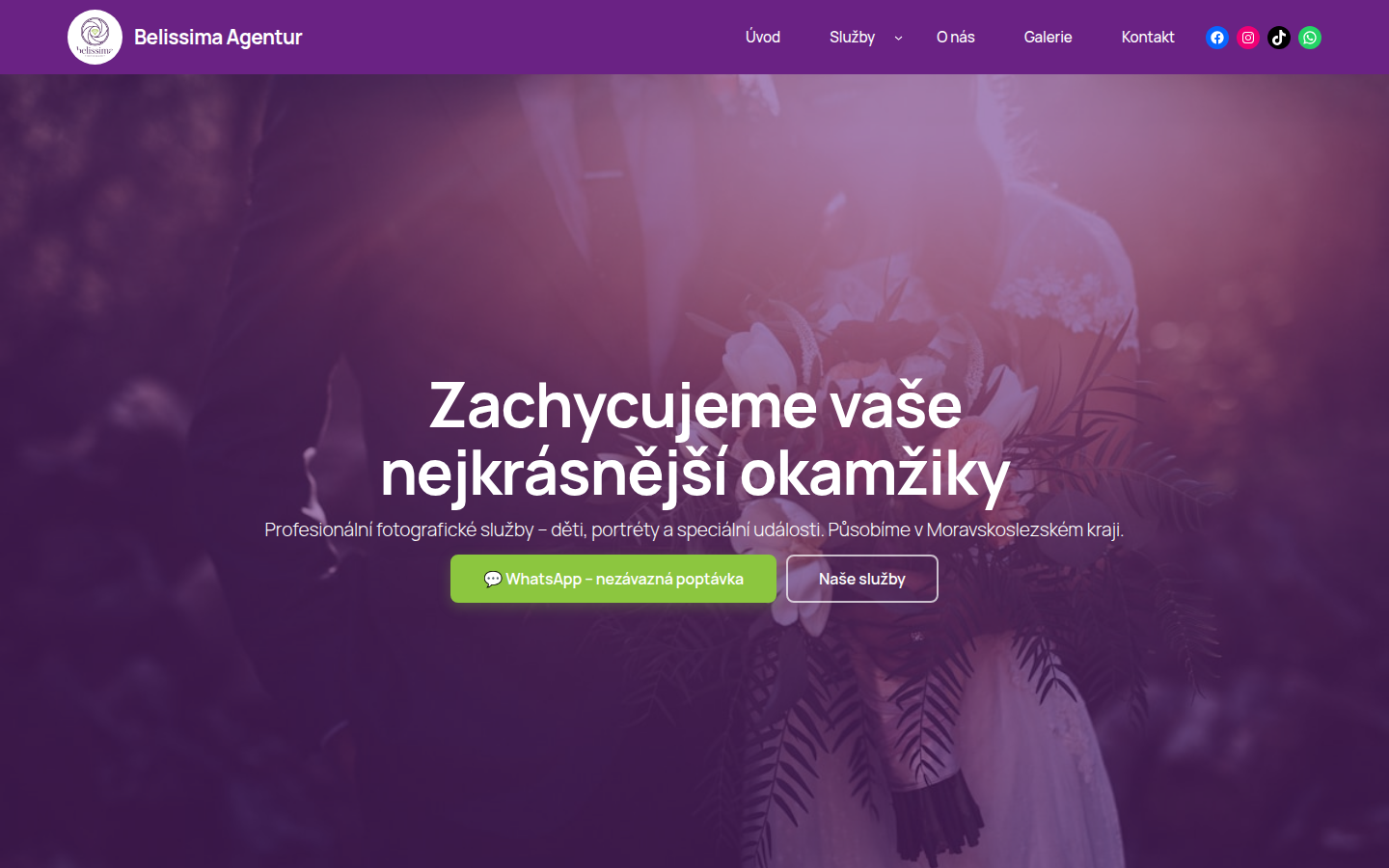
Belissima Agentur
Multilingual agency website with a custom responsive theme, a strong visual identity and clean service presentation.
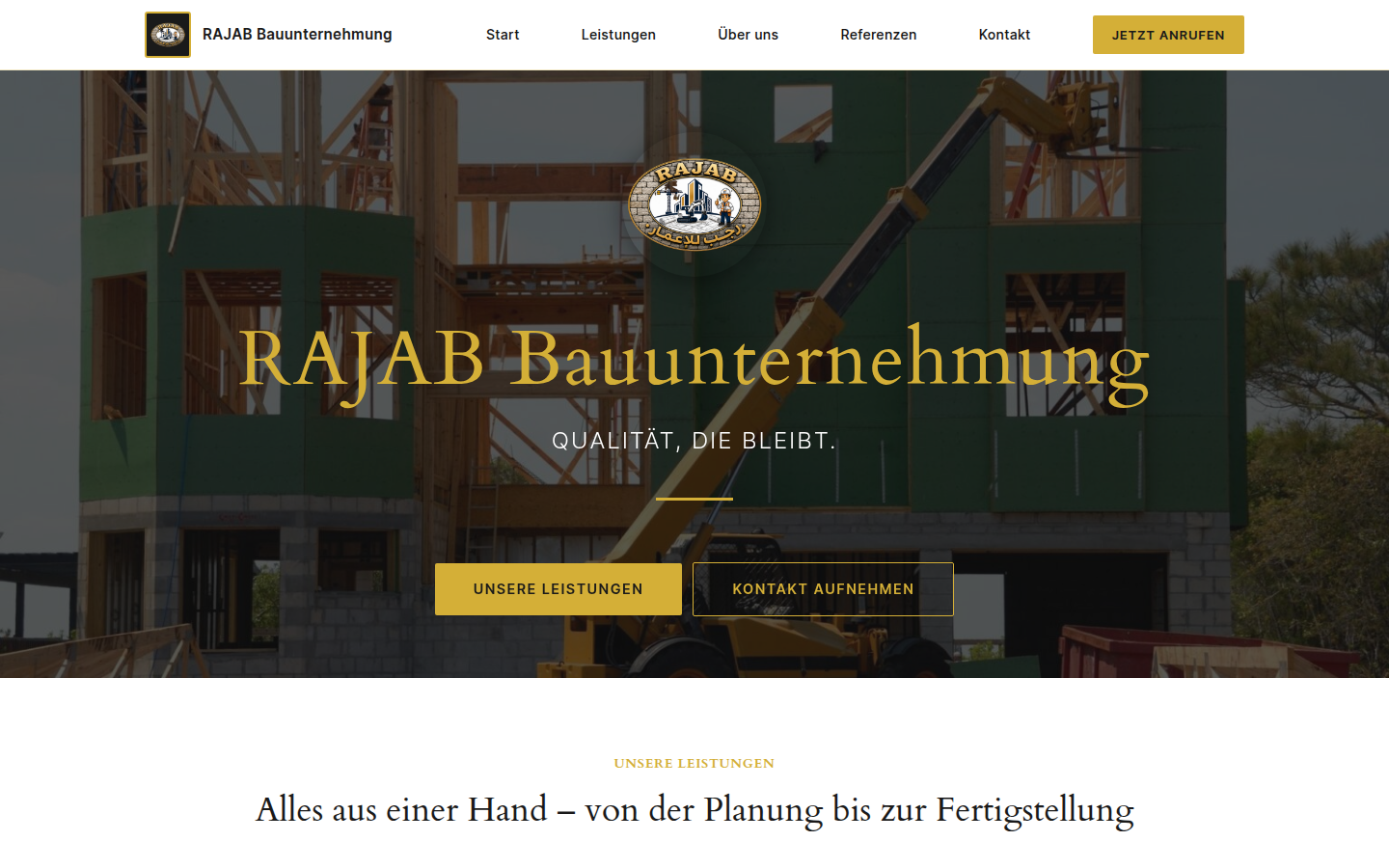
Rajab Bau
Business website built on a custom theme with an SEO focus, responsive layout and performance optimisations.
// comparison
Self-Hosted vs Managed
One decision comes up in almost every conversation: should the site run on a managed platform or on a root server you control? Compared to a managed plan, self-hosting on a German root server costs less per month, removes plugin limits and keeps every byte of data in one jurisdiction — and that is the setup I use for my own projects.
- Self-hosted — full control over Nginx, PHP versions, caching and backups; no per-seat or per-plugin pricing; you need someone who maintains the machine (I do, including monitoring and updates).
- Managed — the provider handles infrastructure and updates; you trade flexibility and data location for convenience, and heavy plugins are often restricted.
On the other hand, managed hosting is the better answer when nobody wants to own a server: if you have no technical contact person and your site is a brochure that rarely changes, paying a monthly fee for someone else’s uptime beats maintaining a machine you never log into. The right choice depends on who answers the phone when something breaks — and that, not the price tag, is the deciding factor.
// numbers
Numbers I Can Stand Behind
Everything below comes from systems I run myself, which is the only kind of data I am willing to quote:
- 3,000+ mailboxes — a MailCow mail platform I operate, with a custom Laravel and Angular control plane managing users through the MailCow API.
- 15+ containers — an LXC/LXD homelab running on a private Tailscale network, including self-hosted GitLab, private NPM and Docker registries.
- 2 CI runners — a self-hosted GitLab instance with two runners using different build strategies for Linux and container builds.
- Since — building and running production systems from Dortmund, Germany, for clients in Germany and abroad.
Public benchmarks are useful for context, with the sources linked so you can check them: WordPress is used by 40.3% of all websites, a content management system market share of 58.8%, according to W3Techs. Google defines “good” Core Web Vitals as Largest Contentful Paint at or under 2.5 seconds, Interaction to Next Paint at or under 200 milliseconds, and Cumulative Layout Shift at or under 0.1, measured at the 75th percentile of real visits (web.dev) — the budgets I use when optimising a build.
“WordPress is used by 40.3% of all the websites, that is a content management system market share of 58.8%.”
— W3Techs, usage statistics and market share of WordPress,
// faq
Frequently Asked Questions
$ cat 01-services.md
What services does Ahmad Kouider offer?
Full-stack development, database work, DevOps and cloud infrastructure, AI integration, e-commerce builds with WooCommerce or Shopify, and system automation. Most projects combine two or three of these — for example a Laravel API with a React front end on a Linux server I also maintain.
Which technologies are used?
PHP and Laravel on the server, JavaScript and TypeScript in the browser with Angular, React or VueJS, MySQL or MongoDB for data, and Docker, Linux and GitLab CI for delivery. WordPress is used where a content team needs to publish without a developer.
Where is the developer based, and does remote work?
Dortmund, Germany (Europe/Berlin), working remotely with clients across Germany and abroad. Meetings happen online, and for projects in the Ruhr area an on-site visit is possible. Communication is available in German and English.
How can a project be started?
Send a message through the contact form or e-mail ahmad@kouider.de with a short description of the goal. You receive a reply with the next steps and an estimate.
How quickly is a project started?
After your first message you usually get a reply within one business day, and a written scope follows once the goal is clear. Smaller tasks such as performance fixes or a landing page often start within the same week; larger builds are scheduled with a defined start date.
Is the infrastructure self-hosted?
Yes. Servers, mail and CI infrastructure run on my own machines — including a self-hosted GitLab with two runners and a MailCow installation with 3,000+ mailboxes. That means the same person who writes the application also understands the machine it runs on.
How is personal data handled?
Only as described in the privacy policy: form submissions are used to answer your enquiry and stored on servers in Germany. No advertising trackers, no selling of data, and you can request deletion at any time.
// verdict
The Honest Verdict
If you want one accountable person for a build that has to work in production — a corporate site, a shop, an internal tool, or the Linux machinery underneath it — that is exactly what this site exists to show, and the case studies above are the evidence. If you need a large team working in parallel, a purely design-led brand exercise, or the cheapest possible template, an agency or a marketplace will serve you better, and I will say so rather than take the project.
Three things you should do before hiring anyone, including me:
- Ask who maintains the server after launch. A site that nobody patches becomes a liability within a year.
- Request the performance numbers, not the design mockup. Treat the Core Web Vitals thresholds above as the minimum bar.
- Insist on owning the code and the credentials. Repositories and access belong to you, in your accounts, from day one.
If that matches how you want to work, the fastest next step is a short message: describe the goal in a few sentences and you will get an answer with a realistic scope and timeline.
// about
Who Writes This Site
Ahmad Kouider is a full-stack developer and IT consultant based in Dortmund, Germany, working in IT professionally since . The claims on this page are backed by infrastructure you can inspect: a self-hosted GitLab with two CI runners, a MailCow platform carrying 3,000+ mailboxes managed by a custom Laravel and Angular application, the offline-first HabitOrbit habit tracker, and an LXC/LXD homelab with 15+ containers on a private Tailscale network. Client work, technical write-ups and open-source experiments are published on this site rather than described in marketing language.
Client work has been delivered for businesses in Germany and abroad — trusted by agency partners, trades businesses and corporate teams that needed one accountable developer instead of a hand-off chain. References from the projects above are available on request, and every figure quoted on this page can be traced back to a public link or a running system.
Profiles and code: GitHub, GitLab and LinkedIn. The resume lists the full history, and the portfolio holds the projects behind each claim.
// contact
Let's Work Together
Delivering innovative IT solutions to help businesses thrive in the digital age.
k@kouider:~$ whoami
Ahmad Kouider — Full-Stack Developer
k@kouider:~$ cat location.txt
Dortmund, Germany
k@kouider:~$ ./reach_me --all
ahmad@kouider.de · +49 176 24888649 · WhatsApp