
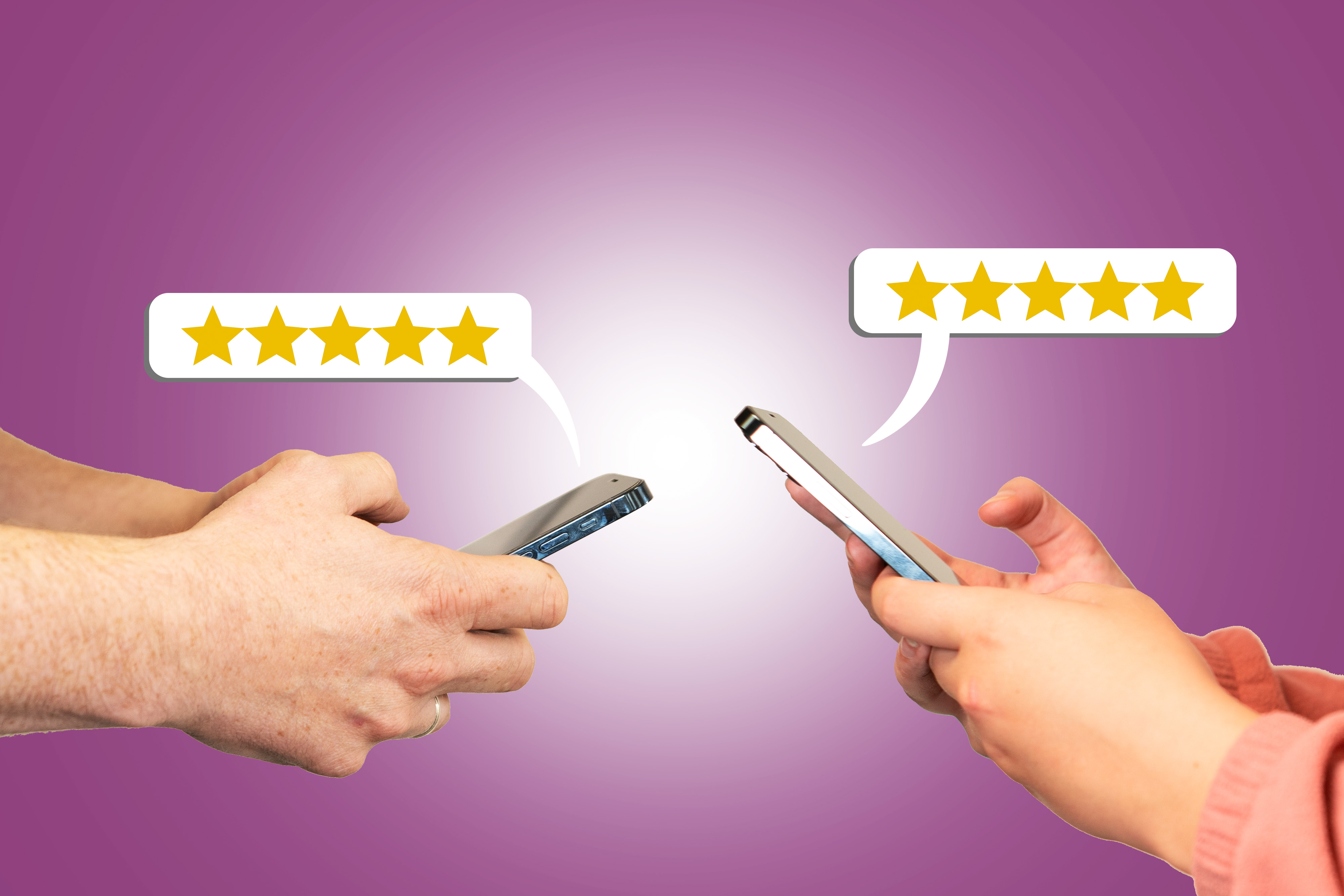
You check the stars before you buy something — a restaurant, a plumber, a pair of headphones. That habit only works if the stars come from people who really bought the thing. Researchers have found marketplaces where those stars are sold by the hundred, and where real complaints are deleted for a fee.
What researchers found
On 2 November, Malwarebytes Labs published what it found on criminal forums — websites where stolen passwords and malicious software are traded. There, sellers advertise “reputation management”: a service that fills a business with five-star ratings, or removes the bad ones.
One seller, working under the name “aqenova”, does not ask what the business sells. The only question is which platform the buyer wants the reviews on — Google, Trustpilot, Yelp, or the app stores. Another operator says its team posts reviews by hand, not with automated accounts, and promises the platforms will not remove them later. It claims more than 10,000.
Deleting a complaint is the more expensive half. Removing one review costs around 100 to 200 dollars. On Airbnb, where one bad review can empty a flat, a seller asked about 1,100 dollars per review.
The detail that matters most: a real person writing the review does not make them a real customer. Someone can be paid to praise a dentist they have never visited. And the writing is increasingly done by artificial intelligence — the same tool that answers questions in a chat window — which varies sentence length and adds small, believable imperfections.
Other reporting points the same way. A consumer watchdog quoted by Global News on 1 November found packages of 100 reviews for about 180 dollars. A UK government study estimated that 11 to 15 per cent of reviews on three product categories — electronics, home and kitchen goods, sports equipment — were likely fake. In September, Singapore’s competition authority closed its largest case: 45 businesses admitted buying fabricated reviews and agreed to public apologies.
Why it matters to you
You use reviews to decide where your money goes: a dentist, a hotel, a moving company, a cheap pair of shoes. When the rating was bought, someone else made that decision for you.
Removing complaints does more damage than adding praise. What you look for is a pattern: three people saying the refund never arrived, or that the item broke in a month. Delete those three and the pattern is gone, and the shop looks clean.
There is a small business on the other side of this. The owner of a café in Halifax, Canada, told Global News that five-star reviews of her business described a dish she does not serve. Honest shops pay for the reputation their competitors buy.
The same UK study measured the pull: a well-written fake review made a shopper 3.1 per cent more likely to buy. Small per person, enormous across millions of purchases.
What you can do about it
- Read the worst reviews first. Two or three one-star reviews show how a shop behaves when something goes wrong. A wall of five stars says almost nothing.
- Look for details. A real review names a thing: the second pair broke after three weeks, the delivery came on a Sunday. Bought reviews stay vague enough for any business.
- Check the dates. Twenty reviews in one week and then silence for four months is not how customers behave.
- Open the reviewer’s profile. An account with one review, or fifteen reviews of unrelated shops in three days, is worth less than a person who has been writing for years.
- Search the name somewhere else. Add the word “problem” or “Erfahrungen” to a search for the business. A complaint usually surfaces in a local newspaper or at a consumer advice centre.
- Ask a person. For anything local and expensive — a dentist, a roofer, a driving school — a neighbour’s answer is better evidence than 200 stars.
Common misunderstandings
Myth: you can spot them by bad grammar
That was true five years ago. Reviews written with AI are fluent, and sellers add typos and uneven sentences so the text reads like a person typing quickly on a phone. Grammar is no longer a signal. Specifics are.
Myth: a verified purchase badge means it is real
It means an account bought something. The documented pattern: the reviewer buys the item, posts the five-star text they were given, and is refunded afterwards by bank transfer or gift card. The purchase is real. The opinion was ordered.
Myth: faking reviews is illegal, so it cannot be this common
It is illegal. In the European Union, publishing a fake consumer review, or paying someone to publish one, has been on the list of banned business practices since May 2022. Laws need someone to enforce them. The Singapore case began with an investigation, not with the platforms noticing.
Myth: only small unknown shops do this
The sellers advertise on Google, Trustpilot and the app stores, and their clients have included a law firm, a funeral home, a hair salon and an online shop. The size of the business is not the signal.
What to watch for next
Expect the fakes to get better, because the writing tools get cheaper every month. Platforms keep improving at removing them, and the sellers advertise a guarantee that their reviews will stay up. That is an arms race you will not see from the outside.
Regulators are also starting to act against the businesses that buy reviews, not only the people who sell them. If you run a small business, buying a rating is a legal risk now, not a marketing trick.
The one thing to remember
Reviews are opinions, and opinions can be ordered like anything else. Read the complaints, not the average. One bad review that names a specific problem is worth more than fifty that say great service.
Image credit: “Positive Customer Feedback” by Zuko.io Images, licensed CC BY 2.0, via Wikimedia Commons.