

Your television knows what you watch, when your living room is empty, and which phones sit on your home network. This month, researchers said LG’s internet-connected sets went further than that. Here is what they found, what LG says, and the settings worth changing tonight.
What is actually going on
On 7 September, the YouTube channel Gamers Nexus published a two-hour investigation into LG’s smart televisions, made with Level1Techs and independent security researchers. They recorded everything shop-bought sets sent out over the internet.
They say the sets logged voices and background noise from the room, sometimes while the screen was dark, kept the files, and uploaded them once a connection returned.
They also say the televisions scanned the home network for other devices such as phones and smartwatches, and collected nearby Wi-Fi network names and location details, all sent to LG’s advertising business.
A second technology runs alongside this one: automatic content recognition, or ACR. It takes a few seconds of sound or picture to work out what is on screen, including from a games console plugged into the side, and matches it against a database.

LG denies the alarming version. The company says its televisions “do not continuously record or transmit users’ conversations”: speech becomes text only after you say the wake phrase “Hi LG” or press the voice button, and “if no wake word is detected, audio is not converted to text, stored, or transmitted.” LG adds that ACR uses sound fingerprints, not screenshots, and that these features are optional.
Both accounts can be true at once. LG describes the ordinary case; the researchers, who hacked a set themselves to listen in, describe what the machine can be made to do.
Why this matters to you
What gets collected is a picture of a household: which evenings the living room was in use, when nobody was home, how many devices were nearby. That is what advertisers pay for.
Prices have fallen so far that some makers lose money on the hardware and earn it back selling viewing data — which is why Walmart bought the television brand Vizio in 2024.
And it is not an LG problem: ACR sits inside almost every modern television, whatever the logo on the front.
What you can actually do
- Switch off the viewing-data setting. On LG televisions it hides behind a friendly name: Live Plus. On newer models: Settings → All Settings → Support → Privacy & Terms → User Agreements → Viewing Information. On older ones: Settings → All Settings → General → System → Additional Settings → Live Plus.
- Turn off Voice Information as well if you never talk to the television. Voice control is the feature that needs a microphone, and it is optional.
- In the same menu, switch off Interest-Based and Cross-Device Advertising, and turn on Do Not Sell My Personal Information.
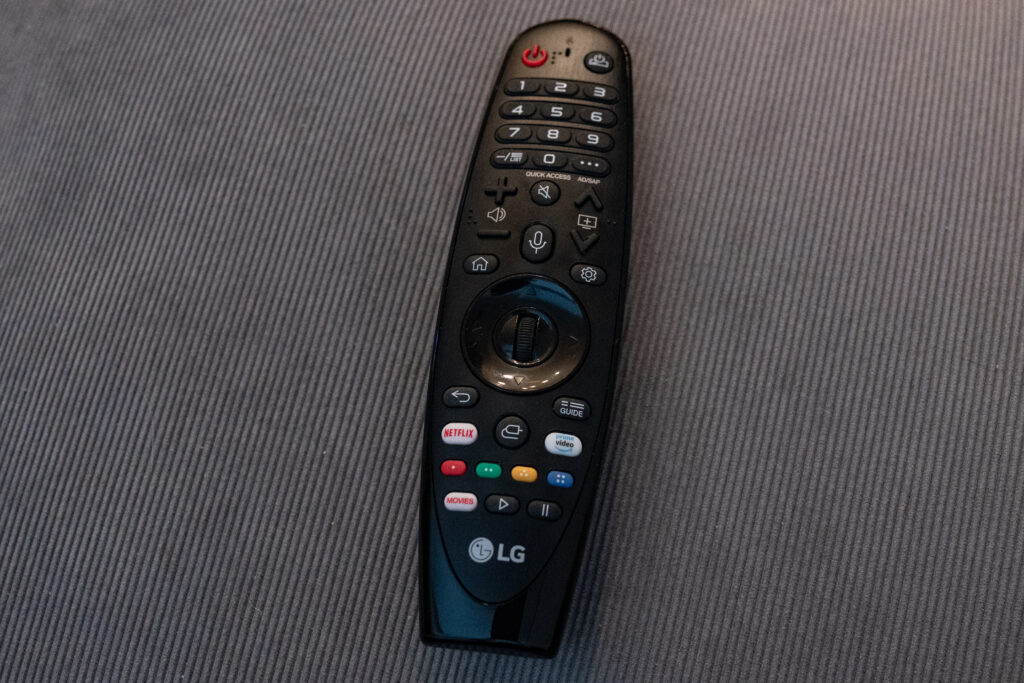
- Use the physical microphone switch if your set has one — but remember that your remote carries a microphone too, and that switch does not cover it.
- The surest option: keep the television off the internet and stream through a stick or box you plug in only when you need it. The television then has nothing to upload.
- Other brands use their own words for the same control — “viewing information”, “viewing data”, “interest-based ads”.
Common misunderstandings
Myth: my television is recording everything we say
LG says no: the set listens for its wake phrase and, if it does not hear it, deletes the audio without storing or sending it. Any voice-controlled device must listen all the time for its wake word, or it could not hear you.
Myth: only LG does this
The LG video was the loud one, but the behaviour belongs to the industry. The Verge ran a piece today titled “It’s not just LG. Every TV company is spying on you.”
Myth: it only matters if I use voice commands
ACR does not need your voice. It watches and listens to whatever is playing, including a games console plugged into the television.
Myth: the settings are hidden so nothing can be done
You cannot stop every bit of data collection, but the viewing-data switch is real and it works. Consumer Reports, which has tested televisions for this since 2018, calls turning off ACR the way to cut the snooping.
What to watch for next
In December 2025 the attorney general of Texas sued Samsung, Sony, LG, Hisense and TCL, alleging their televisions form a “mass surveillance system” recording what people watch at home without proper permission. The companies dispute it and the case is still running.
In Europe the relevant law is the GDPR, which requires a clear yes before a company collects personal data like this. Regulators keep asking whether the yes given during a new television’s setup truly counts as one.
Expect two things in the coming weeks: manufacturers quietly rewriting those setup screens, and scam versions of the story offering to “stop your TV spying”. Nothing of the sort is needed — the controls are in your television’s own settings.
The one thing to remember
Your television is not a spy planted in your living room, but it is a data collector with a microphone and a good idea of how your household lives. Two minutes in the settings — viewing information, voice, interest-based advertising, all off — removes most of what it shares.
Where this comes from: The Verge (12 and 19 September 2026), Al Jazeera (10 September), CNET (19 September) and Consumer Reports’ smart television privacy guide.
Image credits: “LG OLED TV” by LG Electronics, CC BY 2.0; “LG C9 TV Remote Control” by Tony Webster, CC BY 2.0. Both via Wikimedia Commons, unmodified apart from resizing.