
If you drive an electric car in Europe, there is a fair chance you have opened Chargemap to find somewhere to plug it in. On 18 November the company emailed its users to say someone had got into its systems and taken their details. Your bank account is fine. Your password is the part worth thinking about.
What happened
Chargemap is a French app used by more than 3.5 million people across Europe. You open it to see where the next charging point is, and whether it is free or busy.
On 8 November, an outside party got in through a security flaw in an old part of Chargemap’s system. The company noticed unusual activity two days later and closed the hole on 12 November. It told the CNIL, the French data protection authority, on 13 November, and says it has started filing a criminal complaint.
Affected users got an email on 18 November. The real one came from support@chargemap.com — worth remembering, because copies are already going around.
What was taken, and what was not
Start with the reassuring part. Chargemap says no bank details, payment methods or invoices were affected. Your charging history — the places, dates and amounts — was not touched. Neither was your postal address.
For every affected account, the intruder could have taken your email address, your username, and the language the app was set to. If you filled them in when you signed up, your first and last name, phone number, date of birth, town and profile photo were in there too.
So was the date you last logged in, and — if you sign in with Google, Facebook or Apple — the code those services use to recognise your Chargemap account. Chargemap says that code on its own cannot be used to log in as you.
And then there is the password.
Why the password is the part that matters
Chargemap did not store your password as you typed it. It stored a “hash” — a scrambled string made from it. Think of a fingerprint taken from a key rather than a copy of the key itself. In Chargemap’s own words, a one-way transformation.
That is the right thing for a company to do, and it is why no password was exposed in plain text. But a fingerprint can still be used to cut a copy of the key, given the right tools and enough attempts.
The weak spot is old accounts. Chargemap says anyone who had not logged in since April 2019 had their password stored “in an older, less robust format”. Read that plainly: those are the ones most likely to be worked out.
Now the part that leaves the app behind. If that password was also your email password, or the one you use at a shop, a bank or a social network, this is not a story about a charging map any more.
What you can actually do
- Open Chargemap, go to your account and change your password. It takes a minute.
- If you used that password anywhere else, change it there too. Start with your email, then your bank, then social media.
- Change your email password first if the two are the same, because Chargemap sends a code to your email every time you log in.
- If you only ever signed in with Google, Facebook or Apple, there is no Chargemap password to change — leave it alone and watch your inbox instead.
- Forget links. Open the app directly if a message says your account needs checking.
- Look through your charging history. A session you do not recognise is worth a call to Chargemap support.
- Deleted your account? You may still be in the data, and the company cannot email you. Treat this advice as yours.
Three things people get wrong
Myth: they took my password, so my money is gone
No. No financial data was in the breach, and starting a charge from the app requires being logged in, which needs a code sent to your email. What was taken is not enough to charge a car at your expense.
Myth: I sign in with Google, so I am not affected
Your email address and the link to your Google account were still taken. You have no password to change if you never made one, but a stranger now knows which address reaches you and which service you use — which is all a convincing fake email needs.
Myth: I deleted my account years ago
Chargemap says data from accounts deleted before the incident may have been affected, and it cannot contact those people. If an old password is still doing duty somewhere else, change it there.
What to watch for next
The predictable next step is a wave of messages that look like Chargemap. They will use your real name, possibly your town, possibly when you last charged — because that is exactly what was taken.
Chargemap says it will never ask for your password or bank details by email, text or phone. Any message that does is a scam, however much it knows about you.
None of this is unusual any more. A small app that does one modest job still holds your name, your birthday and a fingerprint of your password — and companies keep losing that.
The one thing to remember
The app you signed up for years ago to do one small thing knows more about you than you remember telling it. If its password is the same one you use elsewhere, one breach becomes three.
Change it once and you close the door behind you.
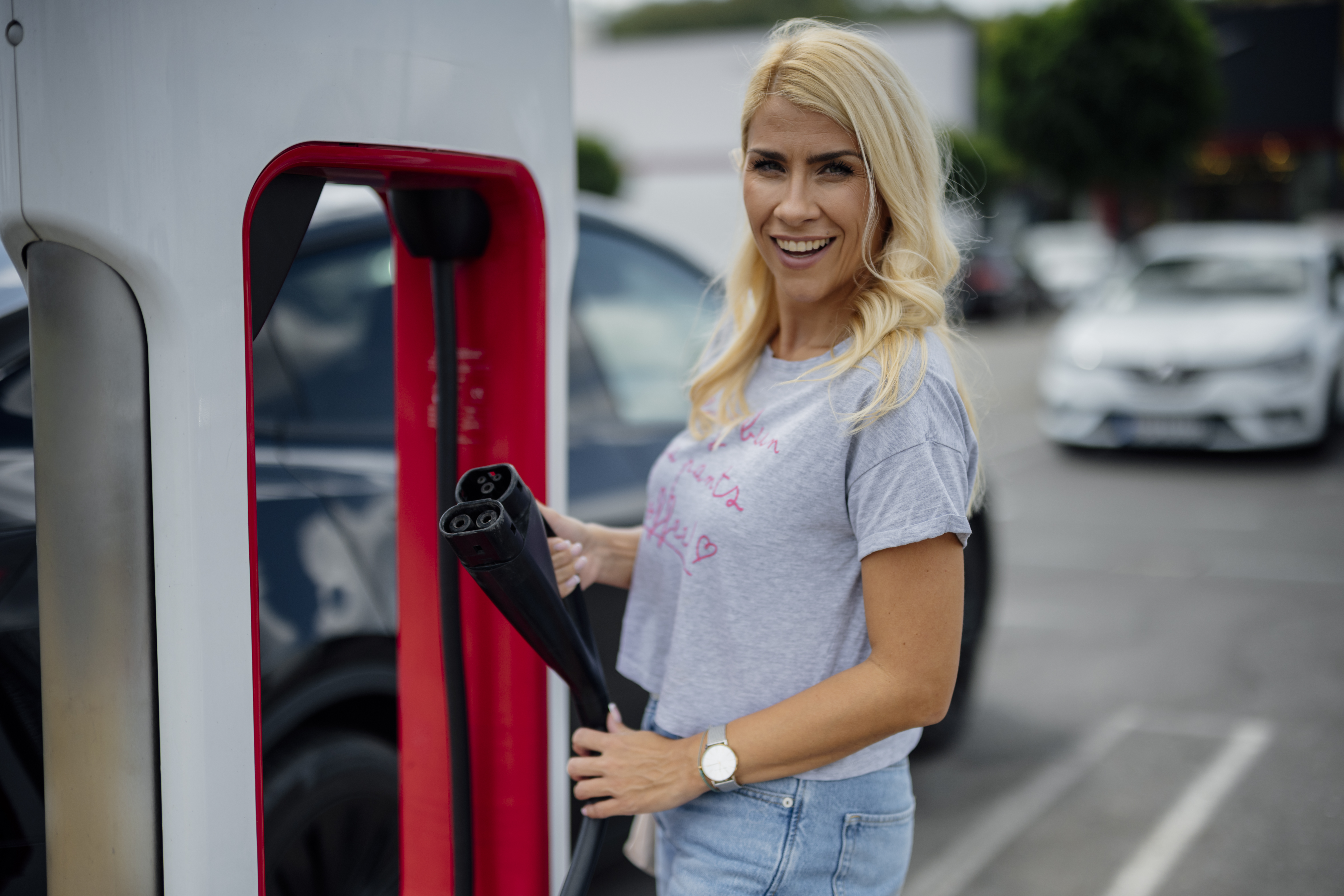
Image: “Woman charging electric vehicle at charging station in a parking lot” by Shixart1985, via Wikimedia Commons, licensed under CC BY 2.0.