
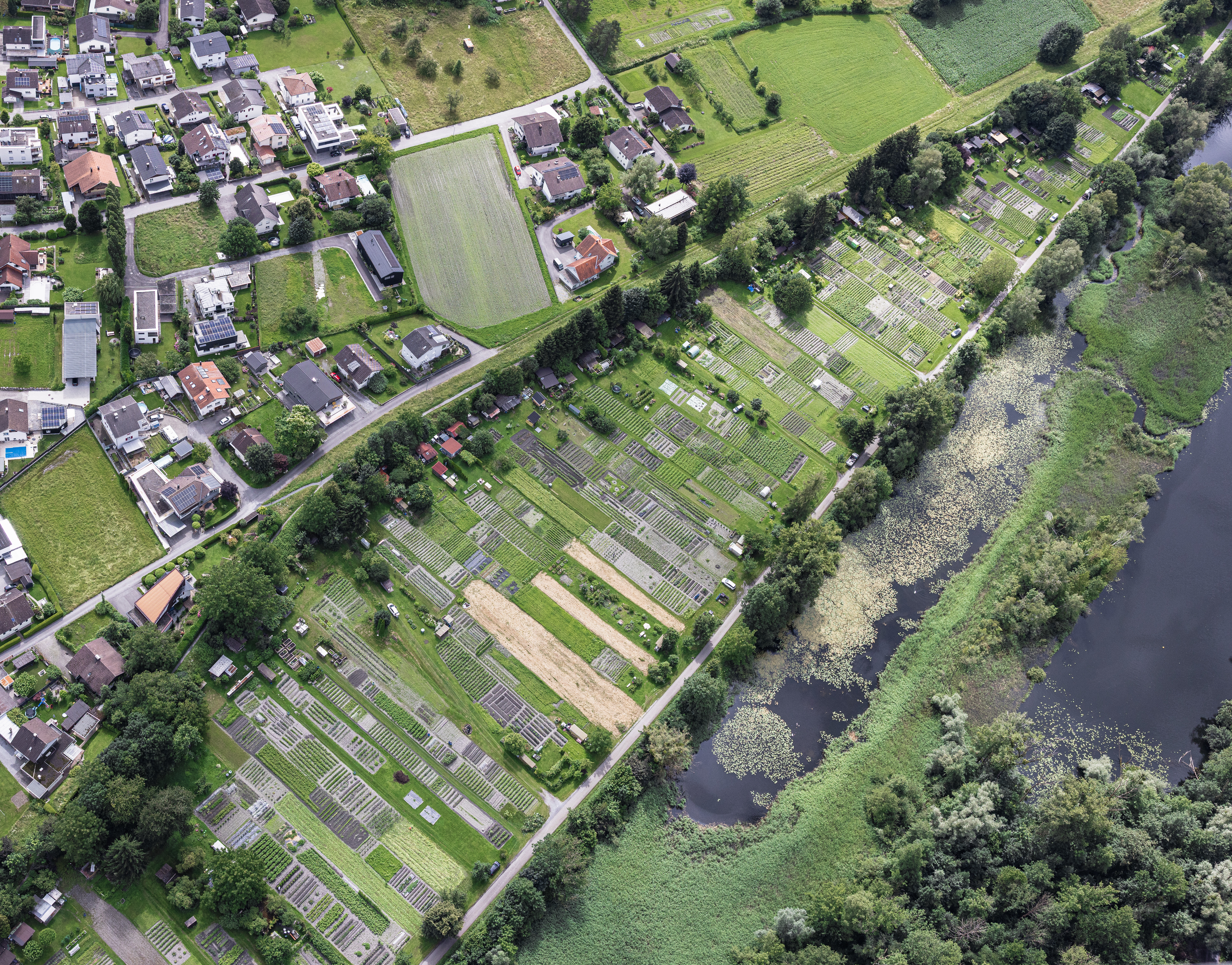
Somewhere online there is a sharp, three-dimensional picture of a back garden: the terrace, the garden chairs, the sliding door you never lock. A court in Frankfurt has now said Google may not publish a picture like that of a home without the owner’s agreement.
What the court actually decided
The case came from a father in Frankfurt. His house had already been blurred on Street View, the ground-level photos of streets, and on Apple’s Look Around. Google would not do the same in the aerial view, where his plot, including the garden behind the house, could be turned, tilted and zoomed by anyone.
The Landgericht Frankfurt am Main, a regional court, decided in his favour on 24 September 2026. Nobody has to accept that aerial photos of their home are spread publicly, worldwide, without consent, the judges wrote, at least where parts of the property are shown that are hidden from public view.
Google must remove those pictures of that one plot. The judgment is not final: Google calls the views valuable for city planning, environmental research and disaster relief, and can appeal. The full text only became public in October, which is why the case is being reported this week.
Why a garden seen from above is different
Google Earth has existed for about twenty years, and its 3D models have grown sharper. They are no longer grey blocks. Roofs have the right shape, and windows, balconies, terraces, garden chairs and pools are easy to make out.
Most people draw the line at the hedge. Close the gate and the neighbours cannot see the terrace. It does nothing against a plane at 15,000 feet, and the flights are not announced, so there is no way to hang a sheet over the garden for the day.
The judges treated that as the heart of the case: you cannot protect yourself from a photograph you never see being taken. Blurring, which Street View offers on request, would be the gentler option, and they saw no reason Google should refuse it.
Why it matters to you
The court gave a reason that has nothing to do with embarrassment. Aerial images show where the gate is, where the side door is, and how someone could get in unseen. Preparing a burglary is named in the judgment as a use that does not deserve protection.
It also made a point that reaches all of us. Anyone who has your address, from an invoice, a parcel label or a club list, can type it in and look down, and the court noted that artificial intelligence makes it easier to join that view to everything else online about you.
You do not have to be wealthy to be affected. The judges rejected that argument outright: a person’s private space is worth the same whatever their bank balance.
What you can actually do
- Look at your own address the way a stranger would. Open Google Maps, search for it, switch to satellite view, then open Google Earth and see whether the 3D view shows your garden.
- Ask Google to blur your house in Street View. Open the picture of your street, tap Report a problem at the bottom right, and follow the form. Owners and tenants may both ask.
- Or write to streetview_deutschland@google.com with your address and the photos you object to. The German consumer advice centre, the Verbraucherzentrale, publishes a ready-made text for this.
- For Apple’s Look Around, write to mapsimagecollection@apple.com. The same page carries a template for that too.
- Repeat the request when new pictures appear. Street View was photographed again from 2022 onwards, and an old objection does not carry over by itself.
- For the 3D aerial view there is still no form; Google’s help pages cover Street View only. The route is Google’s legal removal page, where you describe the problem and point to the Frankfurt judgment, and beyond that a lawyer’s letter. Be clear-eyed: it is a legal argument, not a button.
Common misunderstandings
Myth: Google now has to blur every house in Germany
It does not. The judgment settles one dispute between one owner and Google, and it is not final. A court in Itzehoe decided the opposite way in 2020, finding that aerial pictures revealed too little about the people living there. What changed is that an objection now has a reasoned court decision behind it.
Myth: this only matters if you have something worth stealing
The court rejected that framing. It is not about what a house is worth or what is inside it. It is about a place you are entitled to be unobserved in, and that right does not shrink with income.
Myth: I had my house blurred years ago, so I am covered
Two gaps. Blurring applies to Street View, the view from the street, not to the aerial 3D model. And each new round of photos needs a new request, because an old objection does not carry over.
What to watch for next
The next step is an appeal to the higher regional court in Frankfurt. If the decision survives, every map provider that publishes detailed aerial models faces the same question, and a standard process for objections becomes far more likely.
Owners’ associations are already telling people to check their own plot now rather than after the next flight. The reasoning here, that scattered details become something else once combined, is likely to return in other German data cases.
The one thing to remember
Your home is not a secret, and nobody is suggesting it should be. But it is not public property either, and the view from above was never something you agreed to. Two minutes with your own address tells you what the world can see, and asking for a blur costs nothing.
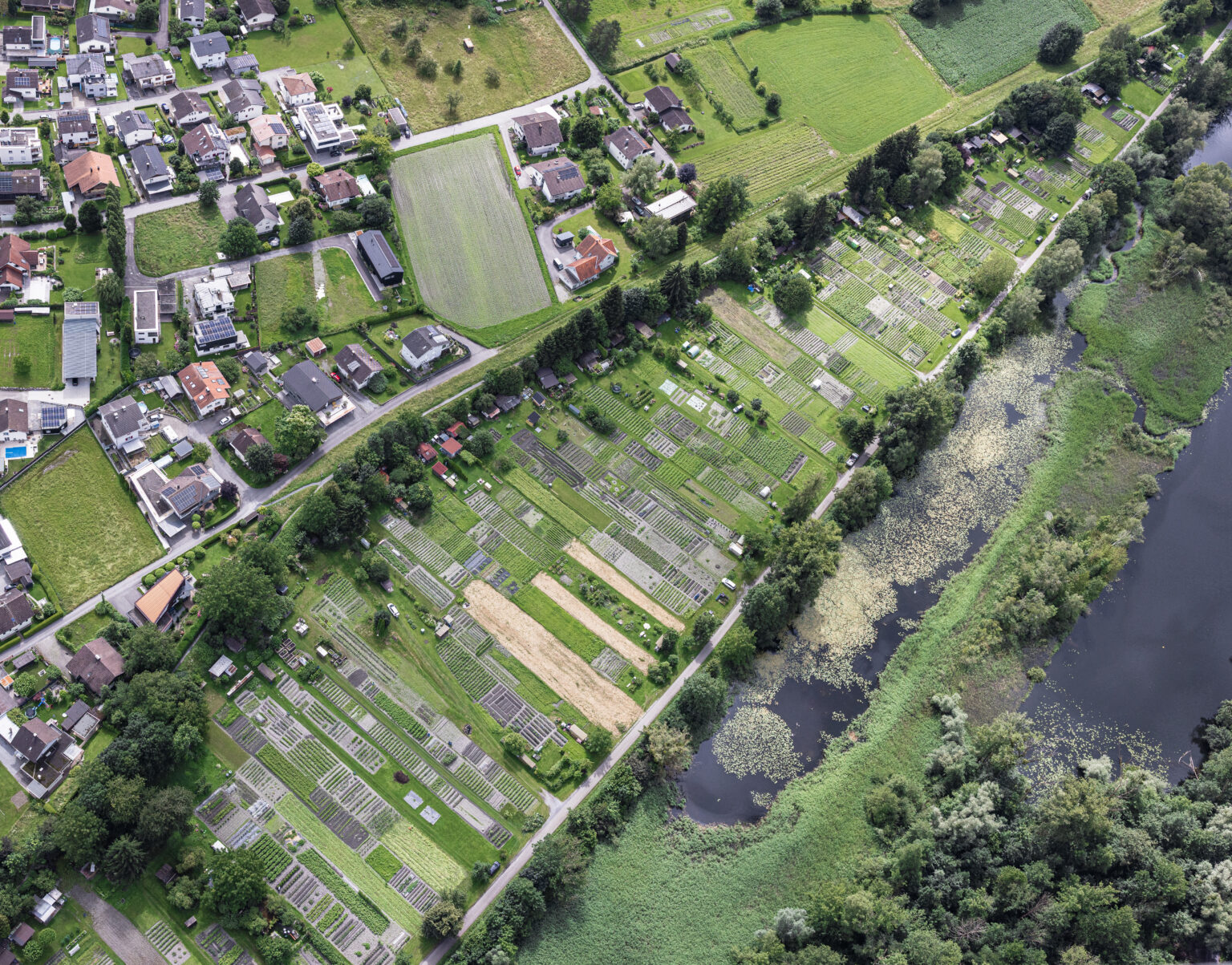
Image credit: “Aerial view of allotment gardens at Wiesenrain” by Herbert Heim, Wikimedia Commons, licensed under CC BY-SA 4.0.