
On Thursday, the world’s biggest stock market decided that AI might not be worth what it had been paying. If you have a pension, some of that money was yours — and nobody asked you before it was invested.
What actually happened
A share price is not a fact about a company. It is what someone is willing to pay for a piece of it today. On Thursday in New York, that willingness changed fast. The Nasdaq, where most of the big technology companies are listed, fell 5.52%. The S&P 500, which tracks the 500 largest American companies, fell 4.4%. Up to $2.5 trillion of value was wiped out in a single day.
The selling then moved east. Japan’s Nikkei fell 6%, its deepest one-day drop since April 2025. South Korea’s Kospi fell as much as 8.8% and trading was halted for 20 minutes to stop the slide. Taiwan’s market ended the week 12.2% lower, its worst week since 1991. Europe opened down as well, with the STOXX 600 losing 1.6%.
Why AI shares fell
Two things happened at once.
The trigger was political. In Tuesday’s midterm elections the Democratic Party won both chambers of the US Congress. Several newly elected governors had campaigned on slowing AI down — above all the data centres it needs. A data centre is a warehouse-sized building full of computers, and AI runs on them. Of 45 local votes on data centres across the country, 39 backed restrictions. UBS estimated that construction pauses could put roughly 30% of the data-centre space planned for 2028 at risk.
The second reason had been building for months. Companies have spent enormous sums on chips and buildings, on the promise of profits later. Investors started asking when later arrives. As one analyst in Asia told Reuters, AI share prices “had been built on rosy illusions about the future, and now that illusion is gone.”
Why this reaches your pension
Pension funds are among the world’s largest investors, and for years they have bought the same AI shares.
On 4 November the research group Equable Institute published the figures. Of the shares held by American state and local pension funds, 35.1% are in AI-related companies. In money, that is between $578 billion and $707 billion, or 9% to 11% of everything those funds own. Their largest single holdings are Nvidia ($47.3 billion), Apple ($42.5 billion) and Microsoft ($28.2 billion).
You do not have to have bought a single share for this to touch you. If your retirement money sits in a fund — a company pension, a private pension, an index fund — that fund probably owns the same handful of companies. The ten biggest companies in America’s main index now make up about 40% of it. “A positive economic outcome from the emergence of AI could meaningfully stabilize public pension plans,” said Anthony Randazzo, Equable’s executive director, “but a negative event like an AI-bubble bursting could cause very meaningful losses that stakeholders should be aware of.”
What you can actually do
None of this is a reason to buy or sell anything today. It is a reason to know what you own.
- Find your pension statement and read the investments page, not only the total. Most statements name the fund your money sits in.
- Ask your provider one plain question: how much of my money is in technology shares, and what happens to it if those shares halve?
- Check your private savings as well. If you pay into an index fund, its ten largest holdings are usually published on the provider’s website.
- Do not decide anything in the first 48 hours of a fall. Prices move fastest when people are frightened, and a pension is measured in decades, not days.
- Be suspicious of anything promising guaranteed profit from AI. The tricks we have written about before — fake trading apps, “advisers” who call you first — get busier after a week like this.
- If you are close to retirement, the conversation with your provider matters more than the news. Ask what the plan does when markets fall.
Common misunderstandings
Myth: a fall on the market means my pension is gone
A lower price on a screen is not money taken out of your account. It becomes a real loss only if you sell at that price. Funds that hold for decades ride out drops; the damage usually comes from selling near the bottom.
Myth: I don’t invest, so this has nothing to do with me
If you have a workplace pension, a private pension or money in a fund, you invest, whether or not you chose to. Your money is in the market by default, and mostly in the same few companies.
Myth: the experts know whether this is a bubble
They disagree. Analysts at Goldman Sachs point out that the big AI companies still earn large amounts of cash and pay dividends, which the dot-com companies of 2000 mostly did not. Others at the same bank worry about how much of the spending is now paid for with borrowed money. Nobody can tell you how this ends, including the people paid to sound certain.
What to watch for next
Three things will shape the next stretch. Whether the data-centre projects that were voted against actually stop. Whether the next round of company results shows AI spending turning into income. And how much of the buildout is financed with debt, because debt turns a bad quarter into a crisis.
The one thing to remember
AI stopped being only a technology story a while ago. It is now where a large share of the world’s retirement money sits. You do not need to react to that, but you should know it, because the number on your pension statement moves with a bet you never placed.
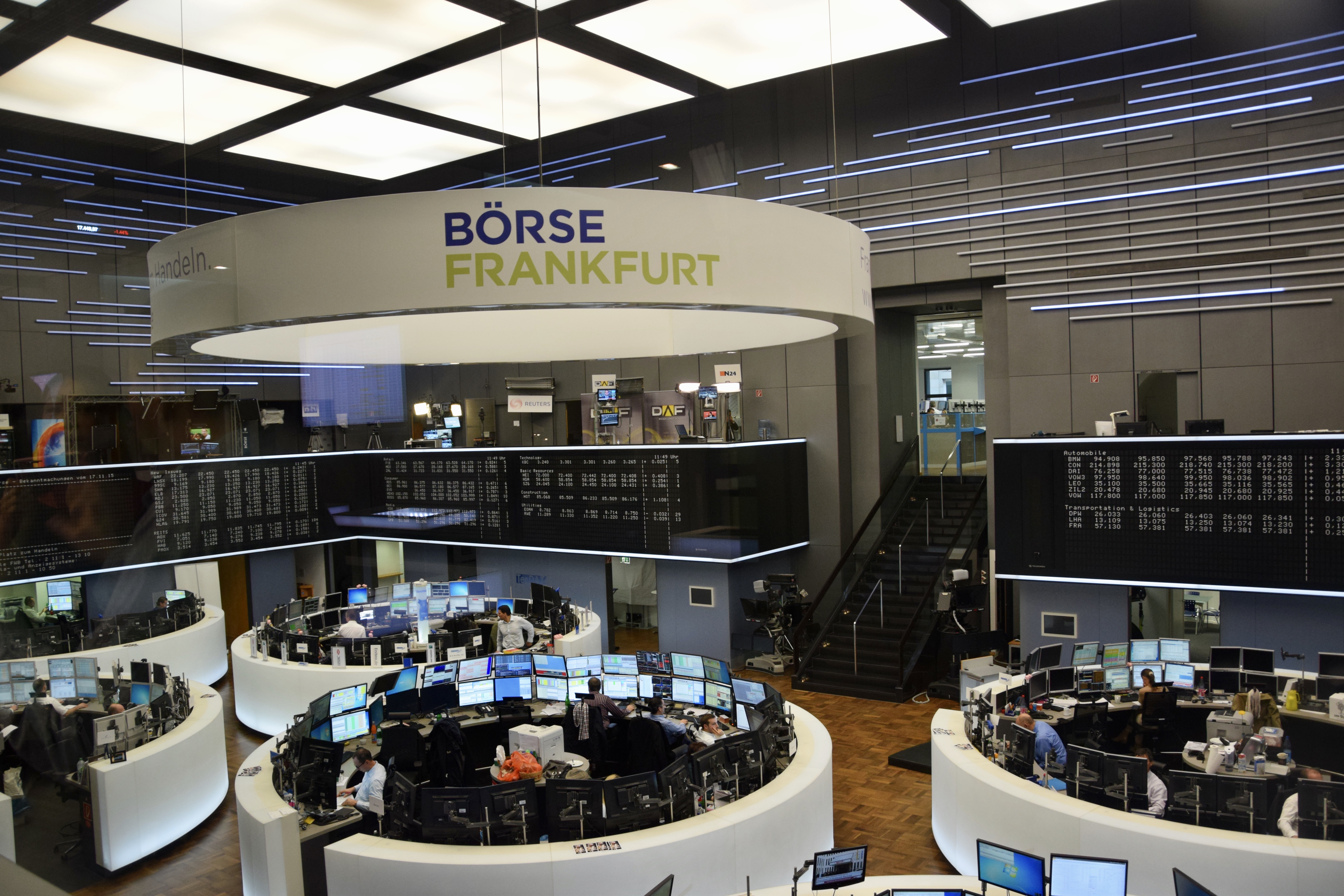
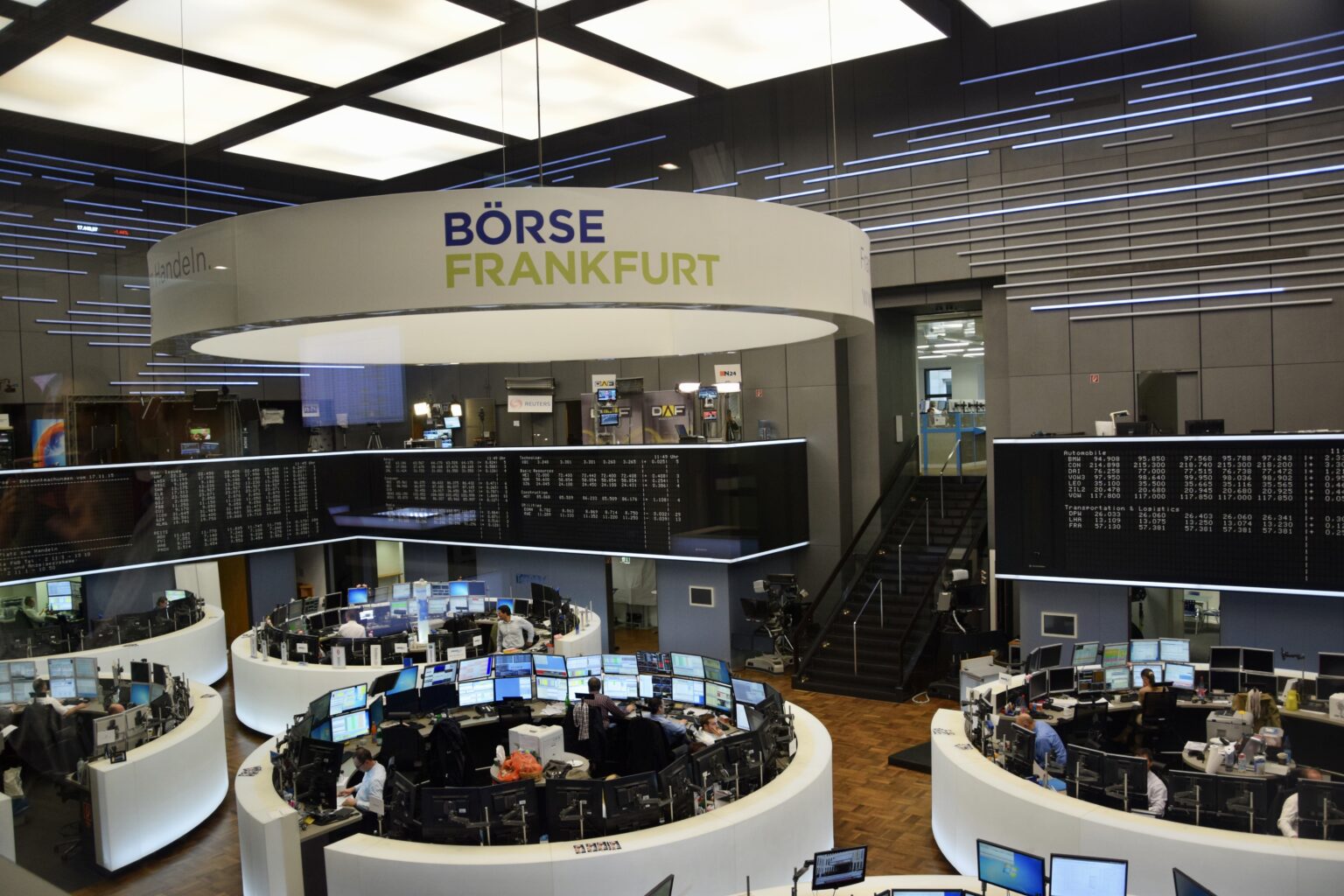
Image: the Frankfurt Stock Exchange, by Ank Kumar, licensed CC BY-SA 4.0, via Wikimedia Commons.