
Every time you ask an AI a question, a computer somewhere answers it. That computer sits in a building with a power cable and a cooling system, and a new measurement shows the same question costs about eight and a half times more in one part of the world than in another.
What was published this week
On 21 October a Swedish AI company called Berget AI published a free, open method for working out how much carbon dioxide a single AI request produces. Researchers from the Stockholm Environment Institute and two non-profits, WattTime and Klimatkollen, helped build it.
The finding is easy to state. One typical request to an openly available model called Kimi K3 produces about 0.4 grams of CO2 in Sweden, 1.6 grams in Ireland, 2.5 grams in Germany and 3.2 grams in Texas, on identical hardware. Same question, same machines, a difference of 8.5 times.
The company says it is the first AI provider to measure every request on its own servers and to publish the method, so anyone can check it.
Why one question can cost different amounts
An AI answer is not made of nothing. The computer that writes it draws electricity, and that electricity comes from the local grid, meaning the shared power supply of the country or region where the building stands.
Some grids are almost carbon-free and others are not. Sweden’s produces roughly 8 grams of CO2 for every kilowatt-hour, the unit on your electricity bill: a thousand watts running for an hour. Germany’s grid is around 337 grams, Texas around 333, and the world average about 470.
The rest of the footprint comes from making the machines. In Sweden almost nine tenths of a request is the manufacturing of the hardware, because the electricity there is so clean. In Texas the split flips: nine tenths is the electricity itself. Hot climates also need cooling water, about six millilitres for that Texas request.
Why it matters to you
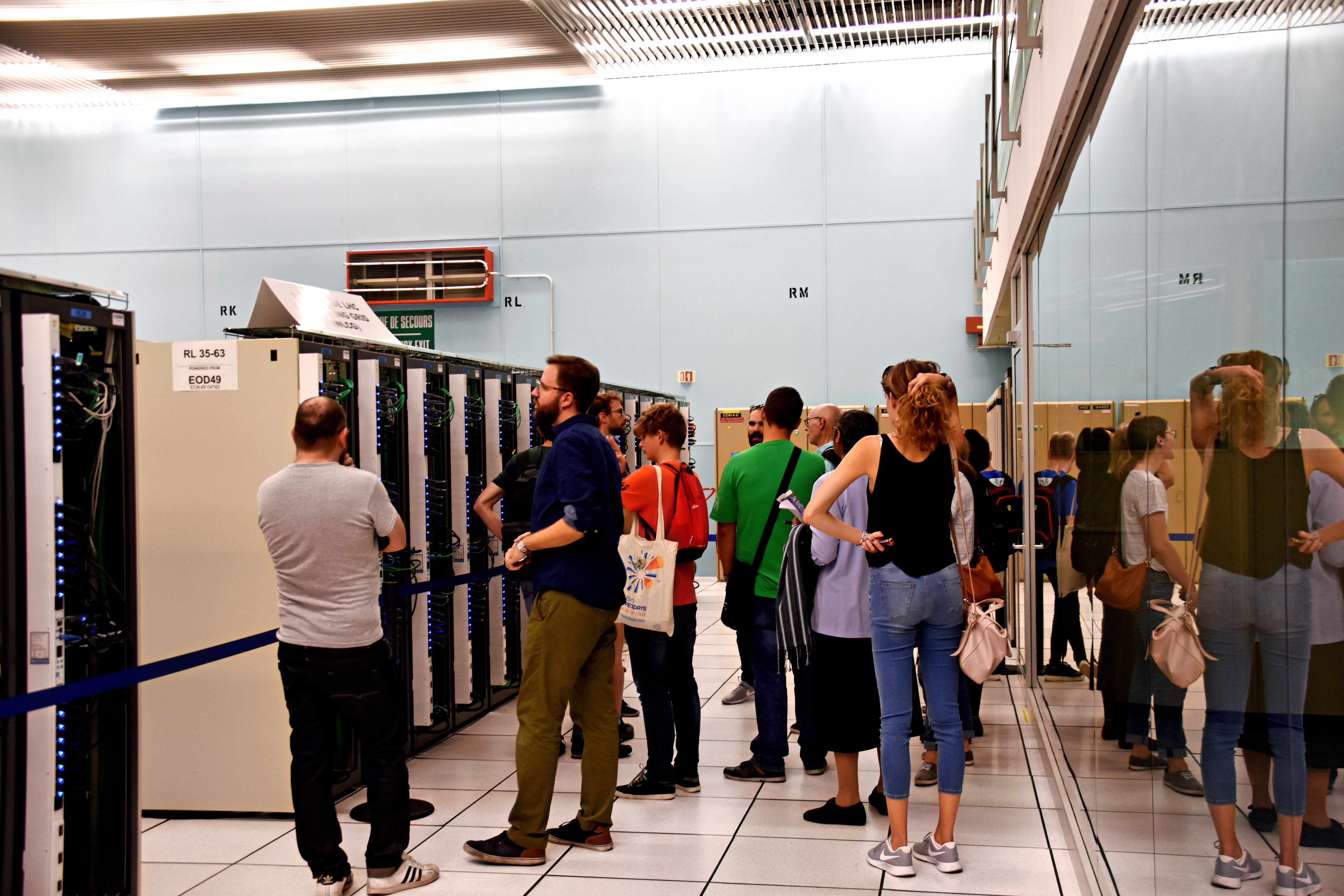
The cloud is not a cloud. It is a building, usually a large one, full of machines that get hot. Your question leaves your phone, travels to one of those buildings, and the answer travels back.
Those buildings are why the numbers matter beyond a single request. The International Energy Agency expects electricity use by data centres to more than double by 2030, to about 945 terawatt-hours, with AI as the main driver. Demand on that scale means new power connections, new water supplies and new neighbours.
For you as one user, the honest answer is that your own question is small: about four watt-hours of energy, a little less than leaving an LED bulb on for half an hour. Multiply it out and one billion requests come to roughly 3,200 tonnes of CO2 in Texas against about 380 tonnes in Sweden, for the same questions on the same machines.
What you can actually do
- Ask for a number, not a slogan. If a provider calls its AI green and publishes no figure per request, that silence is the answer you have.
- Check your region setting. Some AI services let you choose where your data is processed, usually in account settings or on a privacy page. Choose the one nearest to you, because the local electricity mix does most of the work.
- Send the provider one short question: in which country are my requests processed, and do you report emissions per request? A company that can answer has thought about it.
- Keep requests as short as the job needs. A one-line question with a one-line answer uses far less than a long report you will never read.
- Try the free calculator at co2.berget.ai, which applies the published method to different models and regions, so you can compare numbers instead of claims.
Three things people are getting wrong
The cloud is weightless
Nothing about AI is weightless. Every answer runs on a machine that needed metal, glass, water and electricity to build and run. Ignoring that only makes the choice invisible.
Green electricity makes AI free
Cleaner power helps, and the Swedish figure shows how much. But Somya Joshi, research director at the Stockholm Environment Institute, points out the catch: any efficiency gain is likely to be outweighed by higher demand. Cheaper and cleaner AI tends to get used more, not less.
The numbers are exact
They are estimates, built on average figures for each grid rather than a meter on every request. The release even carries a correction: its first version, sent under embargo, said ten times and 1.2 grams for Ireland. A check of the grid data brought the gap down to 8.5 times.
What to watch for next
The method is free to reuse, so the open question is whether other providers adopt it. Buyers rarely get emissions figures today, and the company’s chief executive says most European customers would choose differently if they could see the numbers.
Two things will move the figures themselves. The calculator will add marginal emissions next month, a stricter way of counting that could shift Sweden’s number a lot. And models anyone can run anywhere are taking a growing share of traffic: 29 percent of tokens on Vercel’s AI Gateway in June, against 11 percent in April.
The one thing to remember
An AI answer is a physical event. It happens in a particular building, on a particular grid, and that building decides most of what it costs the climate. You cannot move a data centre, but you can ask where it is. A provider that will not tell you has told you something.
Image: a computer centre hall at CERN, Switzerland. Photo by SimonWaldherr, Wikimedia Commons, CC BY-SA 4.0. Sources: Berget AI’s press release and published method of 21 October 2026, the Stockholm Environment Institute’s release of the same date, and the grid figures and correction published with them.