
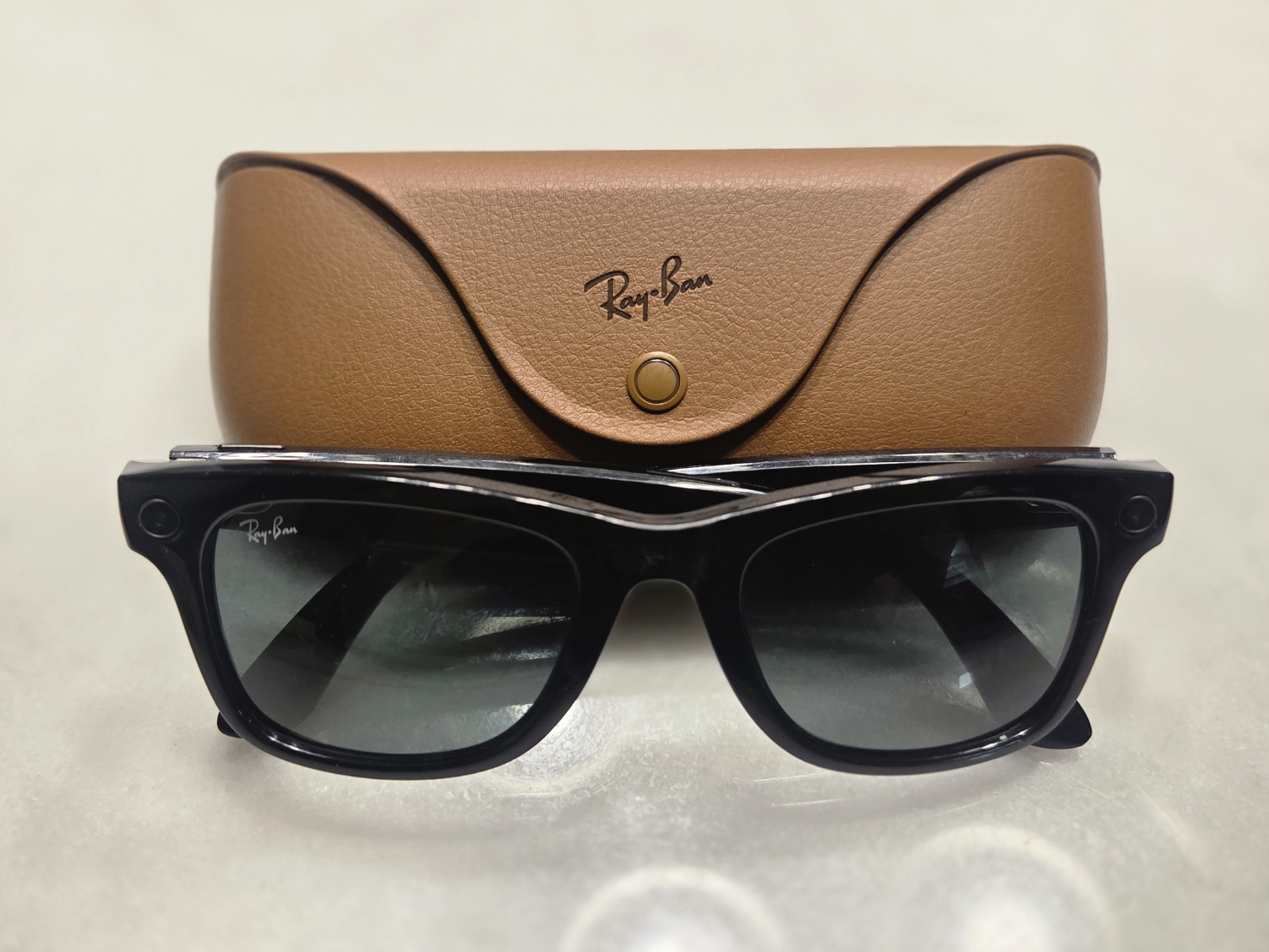
A camera can now be hidden inside a pair of ordinary-looking glasses, and from a metre away you will not notice it. Seven million pairs were sold last year, and the Netherlands has become the first country where shops, regulators and prosecutors are pushing back.
What is actually going on
Smart glasses are spectacles with a small camera, a microphone and a computer hidden in the frame. Meta, the company behind Facebook and Instagram, makes the best-known ones together with Ray-Ban. They cost from around 419 euros, and about seven million pairs were sold last year.
A tiny white light on the front blinks while the glasses record, so that the people around the wearer can spot it. In practice it is easy to miss: the Dutch consumer organisation Consumentenbond showed that a sticker placed over the light, letting a little daylight in from the side, keeps the camera running.
That is where the trouble started. In the Netherlands, hundreds and possibly thousands of women and girls have been filmed without knowing, on beaches, in shopping streets and in bathrooms, and the recordings circulate in private Telegram groups and on websites built for that kind of material. Offlimits, an organisation that helps victims of online sexual abuse, says its helpline keeps receiving calls from people who were filmed this way.
The reaction came quickly. The Dutch eyewear chain Hans Anders stopped selling the glasses in the Netherlands and Belgium, the online retailer Wehkamp stopped too, and parliament passed a motion calling for a ban. On 22 September the Dutch privacy watchdog, the Autoriteit Persoonsgegevens, warned that filming other people and then sharing or posting the footage is, in its words, almost always forbidden.
Meta says the light cannot be switched off, and that the camera stops working if someone covers it. The company says privacy was built into the glasses from the start.
Why it matters to you
This is not only a Dutch story. In August a German organisation, HateAid, filed a criminal complaint in Frankfurt against Meta, Ray-Ban and Oakley and against the opticians Fielmann and Apollo-Optik and the sellers Mister Spex and MediaMarkt. It argues that selling these glasses in Germany breaks German privacy law.
In September, Paris prosecutors opened a criminal investigation after women reported being filmed in the street and the videos posted online. The reason the rules look the same across Europe is a law you have probably heard of: the GDPR, Europe’s data protection rules. Your face is personal data, on a beach just as much as in a changing room.
So being in a public place does not mean anyone may record you and put it online. A video showing people who can be recognised may not simply be published or shared without their permission, and asking everyone in a busy street is usually impossible.
What you can actually do
None of this needs an app or a special setting.
- Look, don’t stare. Camera glasses look like normal glasses, only a little thicker, with a small white light on the front. If that light is glowing, the camera may be on.
- Do not trust the light. It is easy to miss and can be covered. If something feels wrong, ask: “Are you filming me?” You do not have to apologise for asking.
- Ask for it to be deleted. Ask the person to delete the footage while you watch. In Europe your picture is your personal data, and they have to respect that.
- Report it where it was posted. Most apps have a report button with a privacy option such as “I am in this photo”. Platforms are obliged to act on it.
- Involve the police if it is harassment. Filming someone in a shower or a changing room can be a criminal offence. In Germany you can get free advice from HateAid; in the Netherlands, from Offlimits.
- If you wear them, be open about it. Tell the people around you, switch the glasses off when you are asked to, and keep them off in changing rooms, saunas, gyms and hospitals. Never post a picture of a stranger who can be recognised.
Common misunderstandings
Myth: if I am in public, I have no privacy
Europe does not work that way. Anyone may look at you in the street; nobody may record you and publish it without a good reason. The Dutch authority said exactly that: the rules protect the people who end up in the picture by accident.
Myth: the blinking light means everyone knows
The light helps, but you cannot rely on it. The Dutch consumer group showed how to defeat it with a sticker, the French regulator CNIL has said a light alone does not inform people properly, and the Dutch authority advises hospitals, courts and places of worship to ban the glasses outright.
Myth: it is only a Dutch problem
Germany’s HateAid has filed a criminal complaint, French prosecutors are investigating, British pubs, clubs and cinemas have restricted the glasses, and the European Data Protection Board, which joins up the EU’s privacy regulators, is preparing guidance on them.
What to watch for next
The Dutch government is waiting for that European guidance, expected later this autumn, before it decides about a ban. In the meantime, expect more shops, gyms and venues to write their own rules.
The Dutch consumer organisation gave Meta until mid-October to change the glasses or face court. Meta has already updated them twice, so that recording stops when the light is covered.
The one thing to remember
A camera in someone’s glasses is not something you can switch off. Your face is your personal data in Europe, whether you are on a beach or in a changing room, and the small light is not a promise that the person behind it is behaving. If you are filmed without being asked, you are allowed to say no, and to insist that it is deleted.
Image credits: the photograph in this article is “Ray-Ban Meta Gen 1 smart glasses with charging case” by CCadio, from Wikimedia Commons, used under the Creative Commons Attribution 4.0 licence (creativecommons.org/licenses/by/4.0).