
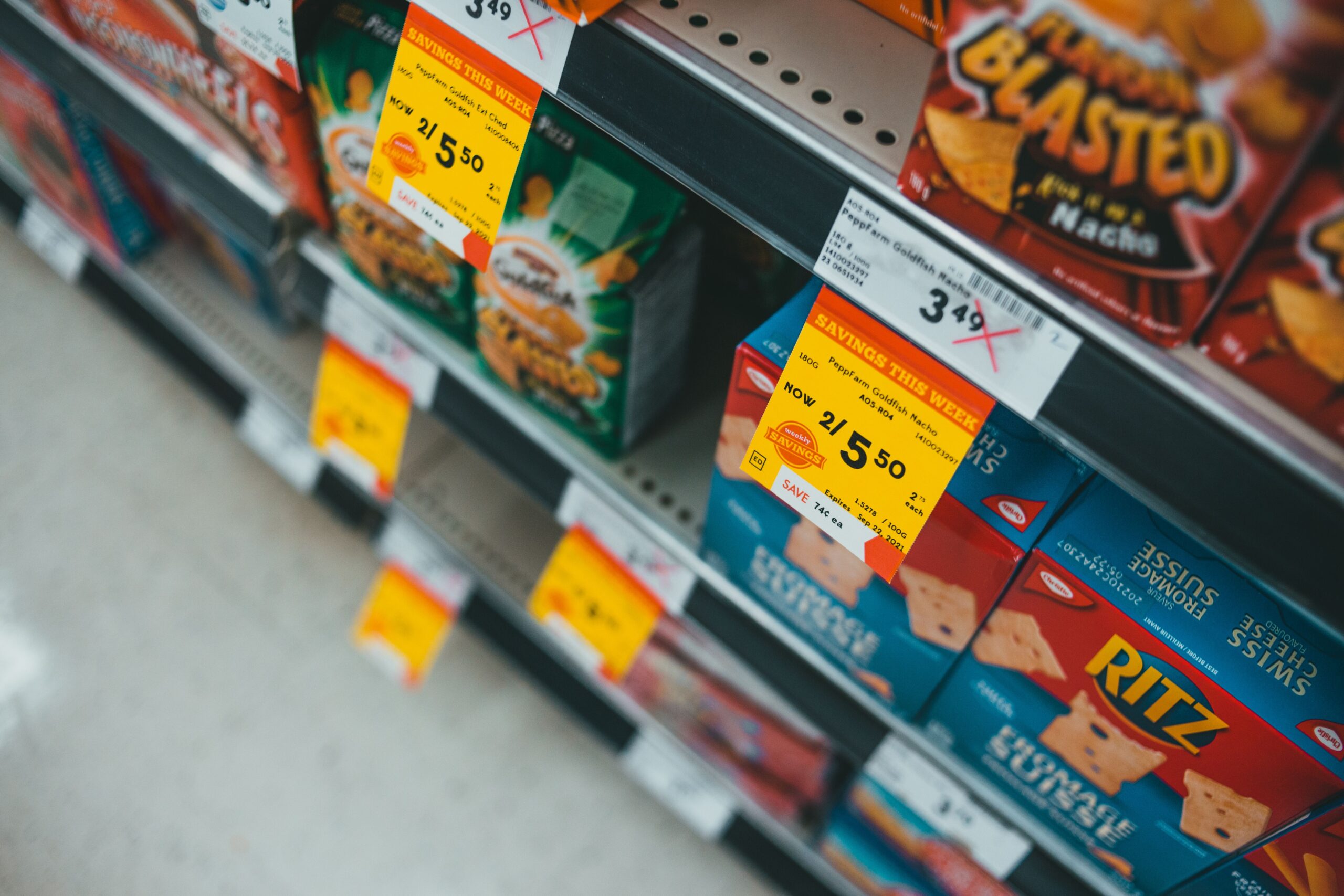
The price tag on the shelf tells you what something costs. It may not tell you what you will pay. Shops are starting to let software work out your price from what it knows about you, and this week one American city banned it.
What Seattle just voted to stop
On Tuesday evening the Seattle City Council voted 7 to 2 to pass the Fair Pricing and Transparency Act, banning large grocery chains and delivery services from using your personal information to set your price.
The law lists what counts: your browsing history, your location at that moment, and the shop’s guesses about your income, family size, health, race, gender or job. Prices must be posted clearly, and be the same for everyone.
Grace Gedye of Consumer Reports, the consumer organisation that supported the bill, said it in one line: “The price you see shouldn’t be different based on who you are.”
Normal savings stay: coupons, senior days and bulk deals are allowed, as long as anyone can use them. The bill still needs the mayor’s signature and would not take effect until September 2027. Three American states — Maryland, Connecticut and New Jersey — have already banned the practice, and Seattle is the first city to do it.
What “surveillance pricing” actually means
Imagine a market stall where the seller quietly changes the number on the sign depending on who walks up. Surveillance pricing — also called personalised pricing — is that stall run by software.
The shop does not need to follow you around. It reads the loyalty card you scan, the delivery account you order from, the pieces of code that watch what you click and hover over on its website, and data bought from companies whose business is tracking people.
So it is not a normal discount: the same packet, in the same shop, in the same minute, at a different price than your neighbour sees.
Why this matters to you
This is not a theory. In December 2025 Consumer Reports, with Groundwork Collaborative and More Perfect Union, sent nearly 400 shoppers to buy the same basket from the same stores at the same time. Different shoppers were quoted different prices for the same products — up to 23 per cent more on some items — and the researchers put the yearly cost for a family of four at more than 1,200 dollars.
At one supermarket in Washington, D.C., a dozen eggs appeared at five different prices at the same moment: 3.99, 4.28, 4.59, 4.69 and 4.79 dollars. No shopper could tell which number was theirs.
Groceries are only the beginning. Consumer Reports found a 62-page data profile on a single Kroger shopper, with guesses about income, family size and gender, and found Uber and Lyft charging different customers different fares for the same trip ordered minutes apart.
The difficult part is that you cannot see it. When the same loaf costs two people two different amounts on the same afternoon, only one of them finds out.
What you can actually do
- Compare once, on purpose. Ask a friend to look up the same item in their app while you look it up in yours, at the same moment. Two different numbers mean the price is personal.
- Trust the shelf tag, not the app. The tag is the price for everyone; if the app wants more, ask why.
- Ask what your loyalty card knows. In Europe you can request a copy of the data a shop holds about you, and ask it to delete what it does not need.
- Turn off location and tracking for shopping apps you barely use, in your phone’s Settings under Privacy (iPhone) or Permissions (Android).
- Keep the evidence: a photo of the shelf tag next to the app price, taken at the same time.
- Say something. In Germany the consumer advice centres (Verbraucherzentrale), and in the rest of the EU your national consumer authority, take complaints about unfair pricing.
Three things people get wrong
Myth: this only happens in America
The software is sold to shops that trade in Europe too. European consumer groups have spent years asking Brussels to act, and the European Commission has promised a Digital Fairness Act in the last three months of 2026, with personalised pricing among the practices it should cover.
Myth: a personal discount is free money
Instacart, the delivery company at the centre of that investigation, says it has stopped showing different prices. But it told Consumer Reports it would still let grocery chains and food brands test promotions on customers, so “offers just for you” keep coming. A price nobody else can compare with yours is not a saving you can check.
Myth: I have nothing worth hiding
Nothing secret is needed. What sets your price is the ordinary shape of your habits: where you live, what you search for, what you leave in your basket. You do not have to be interesting to be worth a few extra euros.
What to watch for next
Seattle’s rule still needs the mayor’s signature, does not apply until September 2027, and the grocery industry warns it could cost shoppers their coupons and loyalty programmes. Expect court challenges.
More rules are coming: three American states banned surveillance pricing this year, and the EU’s Digital Fairness Act is due before the end of 2026. On a shop’s website, the words to watch are “personalised offers” and “just for you”.
The one thing to remember
When a shop sets your price from what it knows about you, it is deciding how much you can afford, and you never see the tag it shows someone else. A price that is the same for everyone is the only one you can check. If you cannot find it, ask.
Image credits: Supermarket aisle with price tags on the shelves by Erik Mclean, via Pexels, used under the Pexels License (free to use).